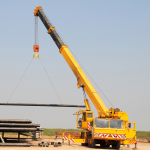
1. Truck-Mounted Cranes
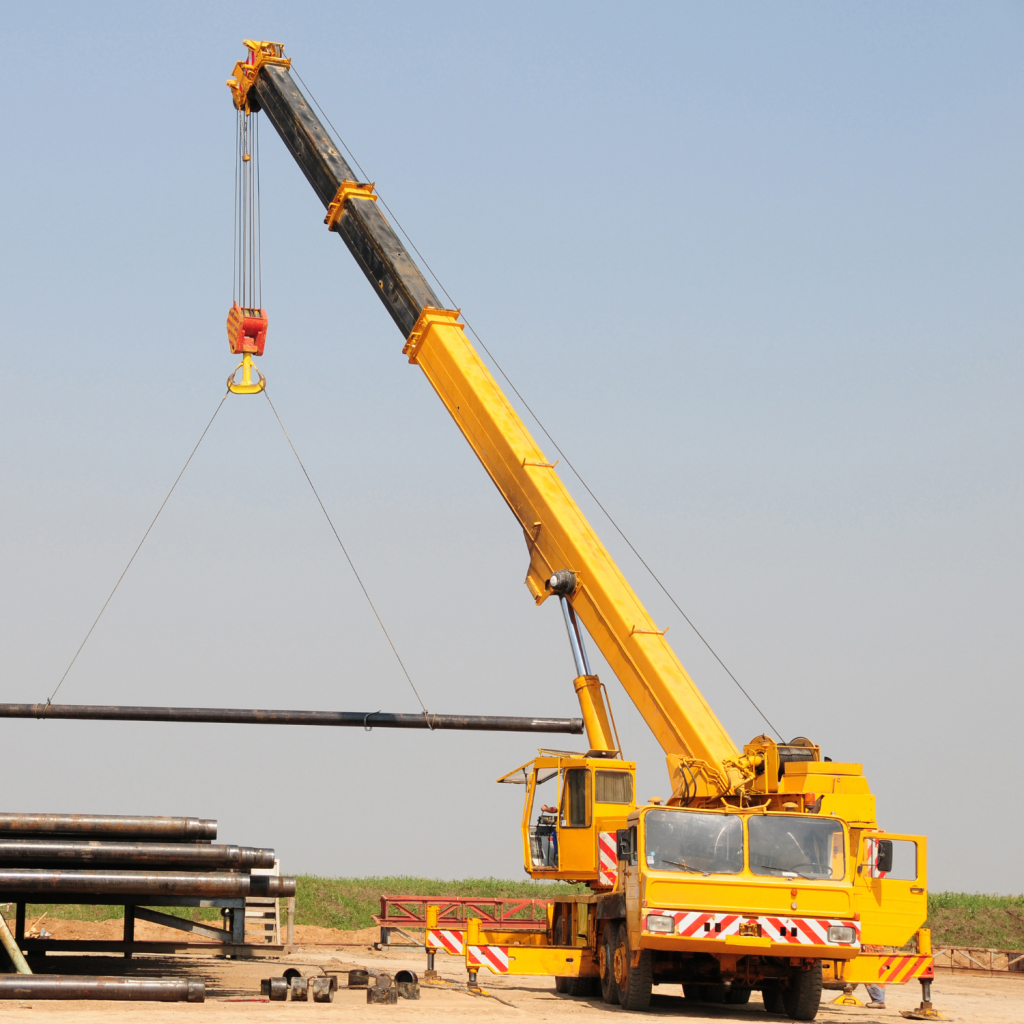
Truck-mounted cranes are among the most commonly used mobile cranes. These cranes are fitted onto a standard commercial truck chassis, allowing easy road travel between job sites.
Key Features:
- Telescopic boom
- Outriggers for stability
- Quick setup and breakdown
Operations: They are ideal for maintenance jobs, utility services, and small to medium construction projects where mobility is essential.
2. Rough Terrain Cranes
Rough terrain cranes are specially designed for off-road applications. They are equipped with four large rubber tires and four-wheel drive, making them suitable for uneven and rugged job sites.
Key Features:
- Compact design
- Powerful lifting capability
- High maneuverability
Operations: These cranes are best used in infrastructure projects, oil fields, and construction zones with difficult terrain.
3. All-Terrain Cranes
Combining the features of truck-mounted and rough terrain cranes, all-terrain cranes can travel on highways and handle off-road conditions effectively.
Key Features:
- Multiple axles
- Advanced suspension
- High load capacity
Operations: They are ideal for heavy-duty tasks such as wind turbine installation, bridge construction, and large-scale infrastructure projects.
4. Crawler Cranes
Mounted on crawler tracks instead of wheels, crawler cranes provide excellent stability and lifting power. They are designed for long-term projects requiring precise lifting operations.
Key Features:
- Lattice boom
- High lifting capacity
- Stability on soft ground
Operations: Commonly used in bridge construction, power plants, and large industrial sites.
5. Carry Deck Cranes
Compact and agile, carry deck cranes feature a 360-degree rotating boom and a flat deck for transporting materials.
Key Features:
- Easy maneuverability
- Small footprint
- Quick lifting
Operations: Perfect for indoor and industrial tasks, especially where space is limited, such as warehouses and manufacturing facilities.
6. Telescopic Handler Cranes (Telehandlers)
Telescopic handlers are hybrid machines with features of both a crane and a forklift. They are equipped with an extendable boom that moves up, down, and forward.
Key Features:
- Adjustable boom
- Multiple attachments (buckets, forks)
- All-wheel steering
Operations: Used for material handling in agriculture, construction sites, and logistical operations.
7. Floating Cranes
Floating cranes, also called crane vessels, are mounted on barges or ships. These are used for heavy lifting in marine construction.
Key Features:
- Water-based operation
- High lifting capacity
- Strong balance and stability
Operations: Ideal for offshore projects, bridge construction, and port development.